Monday, March 28, 2016

The Indiana Pirate Fest

This past Saturday, I attended a land-locked pirate festival in the tiny, tiny town of Mishawaka Indiana. The Indiana Pirate Festival is in its third year. It was my third different all-pirate venue, and comes highly recommended.


First things first – the bad. Mishawaka is not a big place, and its proximity to the much larger City of South Bend makes it hard to find. In addition, the state of Indiana does not have the best road signage in the world. Be prepared to keep a sharp eye out when driving here.

I managed to get lost, and arrived late. Information about the fest had not listed a street address, only that it was taking place at the “BK Club.” Coming into town, I was nervous about overlooking a well-known but poorly-labeled venue. My fears were entirely unfounded. The crew had thoughtfully placed a huge pirate ship in the parking lot, and surrounded it with pirates to greet new arrivals and direct us to unloading and parking areas.


Many willing hands helped me into the building, and I quickly set up my vending table and changed into my pirate costume. (After one terrible afternoon lost is southern Wisconsin, I’ll never drive in garb again.) The fest had thoughtfully provided a changing room.

The space was one large room, clean, very well lighted, pretty, and well-kept. A small stage -  as I was walking in the two men doing a fencing demonstration stopped after knocking something off the wall and informed the crowd “This is a VERY SMALL STAGE” – stood at one end of the space. Vendors took up much of the remaining area. The entrance was at the opposite end.


I immediately noticed that almost all the guests were wearing some effort at a pirate costume, and most of them were home-made, rather than something purchased over the internet. This gives a fest a real bonus. When the visitors get into the spirit and make an effort, everyone has a better time.

The two swordsmen – The Rogue Blades - managed to get through their act without killing each other or doing any more damage, and received a hearty round of applause. Rows of folding chairs provided seating for about 30 people. Most remained in place as the next act, Drunk and Sailor, began to sing sea shanties.

I chatted with the folks in the booth next to me. They were member of the Great Lakes Pirates, taking portraits and offering pirate maps to promote their online magazine. We chatted about pirates, and I also engaged passersby in an effort to sell my wares – Books 1-3 of The Pirate Empire, and my non-fiction book, Pirate of the Golden Age.

Almost at once, a gentleman bought one of each for his girlfriend, young woman in a pirate/renaissance costume. She wanted each book autographed, and it was fun to oblige. While I was doing that, another individual wanted to buy some of my table decorations. No way!

Other vendors included two weapons dealers, someone selling wooden swords and pistols for the small fry, a handmade soap dealer, a pirate-themed pachinko game, a corset-maker, fantasy themed knickknacks, a Tandy leather store, one jewelry maker, and a booth called Steampunk Sweethearts, selling old-time jewelry, beautiful old books, and other fine things.

All in all, a good mix of vendors. All the products seemed well-made and nicely displayed. Pirates were going crazy in the weapons dealers, (just like we always do) but there was plenty of non-pirate items for the general public.

People moved through at a regular pace, smiling, talking and seeming to enjoy themselves. I saw not only pirates, but a wide variety of fairy princess, and four dragons (one of whom, a very patient Akita dog, won Ooohs and Aaahs of approval from the guests.)

Haymarket Whiskey Bar, Louisville KY
Drunk and Sailor
 The place was almost over-popular, but though my booth kept me in one area, I believe that other activities were happening in the parking lot. Certainly plenty of folks were having their pictures taken by the pirate ship.

The next event on stage was a demonstration of black-powder guns, tough to do in a place where the weapons could not be fired, but it was exciting for me to see the genuine old guns, and unloaded muskets were passed around to the crowd.

My own act was up next. I presented “What’s in the Pirate’s Chest?” a look at some of the real items that a real pirate might have been carrying in 1715. My audience was small – I admit that what I was doing was less exciting than the singing, but the kids were attentive and afterwards several adults told me how much they had enjoyed it. I also sold more books.

A beautifully-dressed group promoted a local renaissance fest. The pirates raffled off many lovely items, and the crow looked happy all day. I took some time to speak to one of the organizers, who told me that the first event had taken place in early December, and that few folk had attended. They didn’t seem to be having that problem this time.

A group called Red Rum offered some beautiful ballads, and then the groups cycled through again. The site had a kitchen serving hot sandwiches, and a basement venue selling beer. Beer can be problematic at a pirate fest – in St Augustine, over 50 people had to be thrown out because of behavior unbecoming a pirate. Here, everyone was fine. As the day wore on, more voices were raised to sing along with the bands, but that was all.

I had a wonderful time, my books and my presentation were praised, and I sang until I was hoarse. A couple of pirates danced and Irish jig. The event ended at 6pm, though a pirate party was scheduled for later that night. I only wish I could have attended. But the long drive home was calling me. I offered a hearty good night to my new friends and drove off into the sunset.

I’ll be back next year. You should plan on it, too.


Monday, March 21, 2016

Anne of the Indies – Pirate Spitfire

I’ve always said that I fell in love with pirates when I saw Johnny Depp stagger across the screen for the first time. It’s true – I felt, and still feel, that POTC got the pirate genre just right. The bad guys were really bad, but the good guys were a little bad, too. And everyone needed a bath.

But I recently had a major revelation about why pirates have been so dear to me. It came in the form of a movie, Anne of the Indies, which showed up on Turner Classic Movies a week ago.


Suddenly it all came back. This 1951 adventure flick is so old that is was showing on TV when I was a child – a very small child I might add. And Anne of the Indies is about a female pirate.

Now, female pirates are still a very rare commodity, and they are rarely done right. Even the Queen of the Swashbucklers, Maureen O’Hara, didn’t captain her own ship, but held the honorary position of “Captain” because she owned a pirate vessel. The recent addition of Penelope Cruz’s Angelica to the lineup of female pirates hasn’t done much. Angelica is firmly under the thumb of her powerful father, Blackbeard.

Someday I may write an analysis of female pirates in movies, but today it’s about a particular movie. As I said, Anne showed up when I was very small. Living in a blue-collar family in the 1960’s, strong female role models were few and far between. My mom was partial to Eleanor Roosevelt, but she’s a tough role-model for a small child. However, I received a massive jolt of fierce self-esteem in the form of Jean Peters playing Anne Providence, a real swashbuckling pirate captain.


Anne captivated me. She wore men’s clothes, bossed the crew around like a pro, killed the captives, made jokes about rum and wenches (even thought I was far too young to understand them) and generally kicked ass. I wanted to climb through our TV screen and join her crew immediately.

Jean Peters was as beautiful as you needed to be to achieve stardom in 1950’s Hollywood. But, in true pirate-girl style, she fought against the star system of the time. She simply refused “glamorous” roles. Instead, she played more down-to-earth women.

Jean Peters

Her first movies was The Captain from Castile, a historical drama set in the early years of Spain’s conquest of the New World. She played opposite heartthrob Tyrone Power (who would later portray pirate Jamie Warring in The Black Swan.) After that she mostly showed up in Westerns – the kind of movie were a strong, feisty woman could be at home.

Peters campaigned to get the role of Anne Providence, and some say that it was the breakthrough hit of her career. But later she fought with the studio, which wanted her to take parts that emphasized physical appeal over emotion. After several successful roles, (including Pickup on South Street, for which Marilyn Monroe tutored her on how to play a siren) she retired in 1955. She married reclusive billionaire Howard Hughes, and then pretty much disappeared from sight.


One of the other “just right” parts in Anne is that of the pirate’s surgeon, Dr. Jameson, played by Herbert Marshall. Why, exactly, a full-fledged doctor is serving on a pirate ship is never explained, but Marshall’s Jameson performs with a moral exhaustion that hints at some horrible past. One line also tempts us – “Now I will have committed every sin.” We wonder how he could have racked up so many, because the doctor, Anne’s confidant, is a very sympathetic character. (The actor, Marshall, was inconstant pain from a war wound that has cost him his right leg. He managed to go back to acting, and hid the fact that he had an artificial limb.)

Dr Jameson

It’s been said that there are only two stories – Either “a person goes on a journey”, or “a stranger comes into town.” In the case of Anne, the stranger who comes on board Anne’s pirate ship is Frenchman Louis Jordan, playing the French captain Pierre François La Rochelle. Jordan was a staple in Hollywood films – whenever a suave, sexy leading man was called for, he could probably fill the bill. Interestingly enough, the film that was supposed to be his first was called Le Corsaire (The Pirate). Production had been stopped when the Germans captured Paris in WWII.


I don’t want to spell out the plot of Anne of the Indies – it’s available on line, but comes with a warning. “You’ll enjoy this movie better if you don’t know anything about it.” And I think this is true.

Louis Jordan
One of the many things that is “right” about the movie is Jordan’s character is entangled with the Irish. His ship is named the Molly O’Brien. Another thing is that his story is convoluted enough that, like Dr. Jameson, you never quite find out all of it. Is he a pirate? A captain of the French navy? A privateer? We never know for sure. I think this is story-telling for grownups. Every detail doesn't need to be spelled out.

Of course, no movie is perfect. Blackbeard appears in Anne, but he’s largely played for laughs, something I’ll never enjoy. And, while most of the movie’s sets are wonderful – crowded ship decks, exotic islands, the sea itself, one set stands out glaringly.  The Spanish port of Maracaibo is for some reason dressed up like an Arabian village. The only possible reason for this is that slaves are being sold here, and someone must have thought that only Arabs had slaves.

Thomas Gomez as Blackbeard

As child, I couldn’t understand the ending of this movie. It’s not exactly happy, and at the time I had no idea what rum and a lovesick heart can do to a person. But it’s definitely worth a look. The movie is not available on DVD, but camp out on Turner Classic Movies. Anne of the Indies is worth the wait. It's now a permanent fixture in my TeVo list, and will remain there for quite a while.


Monday, March 14, 2016

Pirates of the Golden Age

The new non-fiction book by TS Rhodes


We’re interviewing TS Rhodes, the author of the new pirate history book, Pirates of the Golden Age: Revealing the True History of Pirates and Their World. Hi, Ms. Rhodes! 

Hi! It's a pleasure to be here!

Question: How did you become interested in pirates?

Answer: I saw Johnny Depp in Pirates of the Caribbean. Since I couldn’t find any other really good movies about pirates, so I started reading books, mostly non-fiction.


Q: How long have you been doing research?

A: It would be thirteen years? I’ve been reading about pirates constantly. There's been a lot of discoveries lately. I’ve also been learning about life during the time of the pirates- the early eighteenth century. Fashion, food, customs, housing.  I’ve also read a lot of general history and social history.

Q: What made you decide to write this book?

A: Well, for one thing, it seemed like there was a need for something like Pirates of the Golden Age. Many of the research books I’ve read were very detailed… Four hundred pages of information on the economic and political lives of eighteenth century sailors, a day-by-day breakdown of the movements of a pirate ship through the Caribbean... It can be a lot to get through.

Q: Didn’t you enjoy reading them?

A: I did. But that’s not for everyone. I was especially interested in writing for young people, and for folks who don’t usually read history books for fun.

Q: Why young people?

A: I’ve read my share of children’s pirate books. But there is this huge gap between How I Became a Pirate and Pirate Santa and grownup books like The General History of Pyrates. There are a few pirate history books aimed at younger readers, but they tend to be out of date. A lot of research and discovery has happened in the last thirty years. It’s changed our understanding of pirates quite a bit.


Q: Are pirates really a children’s topic?

A: Young children love pirates because pirates get to run away from home and do whatever they want. But I hope that as kids get older, they will want to know the story of real pirates. By the time a young person is old enough to want to know what really happened in the past, they deserve to know the truth. I wrote this book especially to be an introduction to the Golden Age, the time between 1690 and 1720, which is what we think about when we think of pirates.

Q: What’s in the book?

A: Pirates of the Golden Age centers on the lives of nine pirate captains, two female pirates, and a child who was a pirate during the Golden Age. But it also contains information on why pirates became pirates – the situation that drove these people to take up a life of crime. It talks about the jobs they held before becoming pirates, how they learned the trade, the clothing these people wore, how they spent their time. I wanted to tell the whole story.

Q: Is it illustrated?

A: Yes. Woodcuts from the actual time of the pirates are included.


Q: Could adults read this?

A: I think many adults would enjoy it as well. So often history books assume that the reader already knows certain things. Maybe you don’t know what women’s rights were like in 1715. But this book fills in all the details that a person needs to know to really understand pirates. It was meant to be a fun read for anyone.

Q: Is it available on Amazon?

A: Yes, it is. Only $9.95! I hope that you'll buy a copy and enjoy it. And if you do, be sure to leave a review. Reviews are the best compliment you can give an author.


Monday, March 7, 2016

Madagascar and the Pirate Republic of Libertatia.

Madagascar is the fourth largest island in the world. It lies off the coast of Mozambique, on the eastern coast of Africa. Geologically, it is a separation of India’s tectonic plate. The animals of the island have been developing in isolation for 88 million years. 80% of Madagascar’s plants and animals are found nowhere else.


The island’s climate is tropical, but a high, flat plateau in the center provide lower temperatures that have encouraged human habitation and have been planted in terraced rice fields.

Humans came to the island about 3000 years ago, but apparently only on foraging expeditions. Permanent human habitation started between 350 BC and 550 AD, probably by people who arrived on outrigger canoes from Borneo. Bantu people from Mozambique arrived shortly thereafter. The current name for the ethic group of the islands is Malagasy, which is also what the islanders call their home.


The name Madagascar was coined by the famous explorer Marco Polo who wrote about the island. Though other explorers tried to name the island after saints, the name Madagascar stuck, possibly for no other reason than its pleasing sense of the exotic.  

Image result for madagascar country lemurs

The poster child for Madagascar’s native wildlife is the ring tailed lemur. There are over 100 different species of lemurs on the island, and lemur are found nowhere else. The island hosts over 260 species of lizard, probably all descendants from just a few individuals who reached the island.
A catlike animal called a fossa is the largest predator on the island, but at only 31 inches long and maximum weight of 19 pounds, they are not generally dangerous to humans.


Until about 1700, the inhabitants of Madagascar ruled the island through a shifting group of tribal coalitions. But at about this time, the pirates arrived.

Europeans had finally reached a sufficient level of technology that they could sail around Africa with general success. When they did so, the stumbled across a thriving commercial culture. India, Arabia, and Southeast Asia all traded through the region, and Europeans wanted what these people had.

The East India Company, a corporation, had been founded by Queen Elizabeth I in 1600. They had struggled against distance, weather and competition from the Dutch. But even the smallest success had the possibility of enormous financial gains.


Madagascar and the surrounding smaller islands were the prefect base for pirate raids on these trading ships. Pirates robbed East India ships, Arab traders, and pilgrims going to and from the holy city of Mecca through the mouth of the Red Sea.

At one time the island of St Mary had a permanent colony of 1,500 pirates and traders. Dishonest merchants could pick up silk, cotton and spices form the pirates and transport these products to ports like New York and Boston, where they could be sold at a huge profit to people who didn’t ask too many questions.


The pirate nation of Libertatia may or may not have been a fiction. But it held a fir place in the hearts and imaginations of pirates world-wide. Supposedly the nation had been founded by a pirate named Captain Mission. According to the pirates, it was a direct democracy. The pirates elected officials to run the colony, but encouraged these people not to think of themselves as rulers, but as public servants, not in any way above the rest of the citizens.

The historian Marcus Riker described the pirates this way:
  “
These pirates who settled in Libertalia would be "vigilant Guardians of the People's Rights and Liberties"; they would stand as "Barriers against the Rich and Powerful" of their day. By waging war on behalf of "the Oppressed" against the "Oppressors," they would see that "Justice was equally distributed."

The colony was supposed to be half-white and half-black, the races intermingled freely. Mission was supposed to have been a French sailor, born in Provance and converted to a belief in atheist, socialist anarchy by “a lewd priest” that he sailed with. When the sailors of Mission’s ship mutinied, they elected him captain, and he then created the pirate nation.


The pirates in this colony became farmers and married native women. They also freed many African, Indian and Arabian slaves, who they encouraged to join their society. Individuals who chose to make money by robbing ships simply turned their plunder over to the common treasury. Even farmer’s fields were held in common.

Was it true? The pirates certainly believed it was true. When pirates began to over-run Nassau in the Bahamas, they claimed that they “would make another Madagascar of the island.”

One thing which definitely attracted pirates to the area was the fact that the locals practiced polygamy. A pirate flush with gold and armed with firearms could hammer out a veritable kingdom on the island.

Visitors describe family compounds surrounded by walls and set apart in jungle terrain. Pirate families were huge, including many women and dozens of children. These visitors were horrified to see that any remnants of European clothing had fallen to rags, and the pirate lords dressed in native style (which was probably a lot more comfortable than the European style.)

Thomas Tew

We have some evidence that known pirates such as Thomas Cocklyn, Thomas Tew and Olivier Levasseur lived in or around Madagascar. Levasseur returned there for a number of years.
But the island life, while pleasant and peaceful, was somewhat boring. Levasseur first ask for a pardon for his crimes, but upon learning that he would have to give back some of his stolen money, he returned to his lair. He was killed shortly thereafter, caught on a pirating mission that he had probably started simply to have something exciting to do.

Image result for real pirate island


The pirates did not so much leave Madagascar as they and their descendants were simply absorbed into the local population. They did leave behind a spirit of freedom. Madagascar become a kingdom in order to stand off the increasingly invasive colonial powers. It spent a short time as a French colony, and it became an independent nation in 1960. Today it is a semi-presidential representative democratic multi-party republic (whew!) with a small industry in pirate tourism, among other things. 

Monday, February 29, 2016

The Final Fate of Captain Kidd

After spending two years chasing pirates in the Indian ocean, William Kidd arrived back home. He had made one significant capture, not of a pirate, but of a ship carrying a French shipping license. Since France and England were at war, Kidd assumed the French ship was a lawful prize.

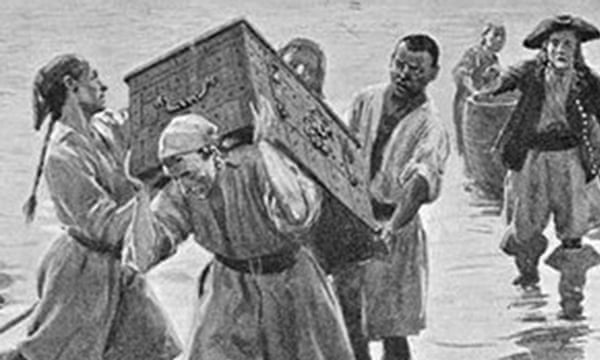
But when Kidd returned to English territory - he made landfall in the Caribbean - he discovered that he was accused of piracy. He left his ship and much of his plunder, and returned to New York using a smaller vessel. The men that he had left buried the treasure and burned the ship as per Kidd's instructions. 


Once in New York, Kidd visited his wife and step-children, and hired a lawyer. He also may have buried additional treasure in the area.

But Kidd’s royal backers were in a frenzy. The plan had been to send Kidd into the Indian Ocean, capture several pirate ships, bring their treasure home on a schedule, and declare victory. Instead, Kidd had taken years more than expected.  The Indian Ocean situation was worse than ever, merchant ship owners were angry, the Royal Navy felt insulted, and people were accusing Kidd of turning pirate himself.

Worse, he may have been trying to cheat his financial backers.

Kidd did not do much to help his own situation. He turned the French licenses from the ship he had robbed over to his lawyer. The lawyer promptly gave them to Kidd's secret backer, Lord Bellomont, who made them disappear. Then Kidd tried clumsily to bribe various people.  He also began to hint that he had vast riches buried. 

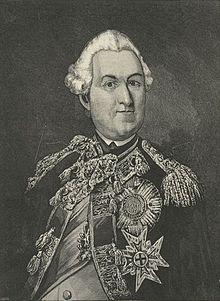
Richard Coot, First Earl of Bellomont

Probably he thought that no one would hang him as long as he had money that only he could recover.
At this time, all pirate trials were held in England. Kidd and the men who returned with him were taken back to England at once. They were held awaiting trial for over a year.

When the trial finally took place, it was a confusion of contradicting testimony. Kidd told a story that wasn’t very consistent. During one part of his testimony, he claimed that the Adventure Galley had sunk. Later he said that he had burned her.

But the real testimony against Kidd was the opinion of the English people. Kidd's mission had been, as much as anything, a public relations ploy. Powerful men in English politics wanted to be seen to be "doing something" about the pirate problem. But they were smart enough to keep their identities secret.

If the mission had gone as planned - a short voyage, the capture of several pirate ship, Kidd returning with piles of formerly-pirate treasure - these men probably would have stepped forward to take credit for the effort. Since it had become a disaster, they wanted their names kept as far away form  the bad publicity as possible.


The end result had already been decided. Kidd was found guilty. But, perhaps because he still believed his powerful backers would save him, he never revealed the names of his financiers.

He did, however, offer to take officials to a “secret place” where he had stashed much treasure. Perhaps he believed that the lust for gold would protect him. Instead, he was sentenced to hang.

His backers, still terrified that he would implicate them, made sure that on the day of his execution, Kidd was too drunk to speak, or even to stand. He was hauled bodily to the scaffold. But when he was dropped, the rope broke. Another rope was quickly put up, and William Kid was hanged by the neck until dead on the 23rd of May 1701. According to custom, his body was then covered in tar and left on display, as a warning to other pirates.


Kidd may have never actually been a pirate, but he became the scapegoat of a failed mission. What he did do was to bury treasure. Conservative estimates say that if it were found today, Kidd’s stash would be worth many millions of dollars.

But where was the gold? Treasure hunters have looked in and around New York, the Carolinas, Catalina Island and Antigua in the Caribbean, and on various islands in the Indians Ocean. Recent explorers claim to have found the remains of the Adventure Galley but nothing is yet verified. Certainly no millions of dollars of plunder have yet been uncovered.


Kidd may not even have been a pirate. But he single-handedly started the stories of buried treasure, and as a pirate legend, he is immortal.

Monday, February 22, 2016

The Notorious Captain Kidd - Part 2

A former privateer, Captain William Kidd had been given a commission from King William of England to hunt pirates in the Indian Ocean

Kidd’s new ship was named the Adventure Galley, a 34-gun vessel with oars and sails, a perfect tool for such a mission. It was built in the King’s own shipyard, and completed in January of 1695.
Kidd carefully selected a crew of 70 men whom he believed would not turn to piracy. Most of them had wives and families in England.


Kidd appears to have been drinking heavily during the launch party, and it caused problems almost at once. While still traveling down the Thames River toward the sea, the Adventure Galley passed a Royal Navy ship. The Adventure Galley was required by custom to salute the navy ship, but for some reason it did not. The navy captain complained, and Kidd’s men replied by dropping their breeches, sticking their backsides over the rail and smacking their bare buttocks.


The navy captain replied by pulling over the Adventure Galley and impressing many men from the crew, forcing them to join the Royal Navy on the spot. Kidd was immediately forced to find new crew members. He then sailed for New York, arriving in July 1696. He set sail again in September,


His required return date, of March 1697 was already impossible to meet.

We next see Kidd and the Adventure Galley 100 miles from Africa’s Cape Town. Kidd stopped a ship of the Royal Navy and demanded that the captain supply him with new sails to replace those that had been damaged in his trip across the Atlantic. When he was refused, he threatened to stop the first English merchant vessel he saw and take the sails from it. The navy captain replied that he would charge Kidd with treason and impress more of his men.

Kidd’s answer was to use his ship’s oars to row away quietly during the night, before any further steps could be taken.

Because of this incident, Kidd did not stop in at Cape Town as planned, Instead he went straight around Africa. Once on the east coast, near Madagascar, he landed to refill supplies. Contact with African germs, coupled with a crew that had been at sea for months, took out fifty sailors through sickness. Once again, Kidd needed to get new crew members. Then he headed for the mouth of the Red Sea, the same spot where Henry Avery had waited with his pirate cohorts to ambush the returning treasure fleet, two years before.


But unlike Avery who seemed to have been graced by good luck, Kidd faced mounting problems. In addition to having lost almost all of his carefully picked original crew, Kidd’s brand new pirate-chasing ship was in bad shape. She had been under sail for only a year, but already her joints were getting loose, causing her to leak badly. The warm tropical waters had done her no good either. Her bottom was being eaten by salt-water parasites called shipworms.

And in only one month, Kid was due back in London with the goods from captured ships.

Weeks passed and they had still had taken no prizes of note, only a few fishing vessels. One man, a gunner named William Moore, got into a ferocious argument with Kidd. Like their captain, the common sailors would receive pay only if they captured ships, and the expedition had so far been unable to find any pirates. Moore began to talk mutiny. In response, Kidd threw a bucket at him and hit him in the head. Moore feel to deck, and died the next day.


Finally, in February of 1698, almost a year after they were due back in England, Kidd and company attacked and seized a merchant ship called the Quedagh Merchant. The ship was owned by Armenians, crewed by Moors, carrying Persian cargo, and captained by an Englishman named Wright. She was also definitely not a pirate.


But she was carrying a French pass, and part of the voyage’s mission was to attack the French. It was good enough for Kidd.

What happened next is still under dispute. Kidd claimed that he was attacked by a pirate named Culliford, who took all the guns, shot and powder from the Adventure Galley, then sailed off. The ship was by this time ready to fall apart, so Kidd transferred everything left by the pirates into the Quedgah Merchant, and burned his former flagship.

More cynical sorts point out that Culliford was the man who had stolen the Blessed William from him in 1689. This story goes that Kidd, whose men were fired up by their recent success, wanted to become full-blown pirates.

According to this version, Kidd gave the Adventure Galley to Culliford, to replace his own ship, which had been badly damaged in a fight. The two men then hung out in local taverns while Culliford’s pirates worked to make the Adventure seaworthy again. Most of Kidd’s sailors did become pirates, but Kidd kept the bulk of the plunder and buried it – and his logbook – in a secret place on the island.


Why would Kidd do this? Why, out of all the pirates in the world, would he alone bury his treasure?

Unlike other pirates, Kidd had investors to pay off. If he arrived back in England with the spoils of his single capture, the bulk of the money would go to the king, the investors, and Blackham. Kidd’s share would have been less than 5% of the treasure he had been working for over two years trying to obtain.

But, if he came home with much less money, say, only £10,000 worth of treasure, he could pay off his investors and later go back for the buried gold. This plan, however, required hiding his logbook as well as the money, because it revealed the amount of plunder had been on the Quedgah Merchant.
Kidd’s story was that Culliford took his logbook.

Kidd's biggest problem was that the Navy captains he had been confronting sent dispatches home regularly, and they had friends in London. Kidd had never treated the Royal Navy with the respect the captains thought they were due. And his loose words and disorderly conduct had inspired them to accuse him of piracy.

By the time Kidd made it back to England, his enemies' stories had been before the public for a long time. Ship owners harassed by Kidd while he looked for pirates, continued reports of blatant pirate activity (in spite of Kidd’s mission to find and attack them), and the reports of enraged navy captains had all painted him as a confirmed pirate long before he reached port.

Kidd made landfall first in the Caribbean. There he learned the story of his supposed “pirate” attacks. But he convinced his crew to return with him to New York, where he was sure he could prove his innocence. But, as a precaution, he sailed north on a small ship he purchased called the Antonio. The Quedgah Merchant with some of the crew, stayed behind on the island of Hispaniola. The crew stripped her of goods, buried the treasure, and then burned her.

Next week... The fate of Captain Kidd


Monday, February 15, 2016

The Notorious Captain Kidd

Captain Kidd is one of the most notorious pirates of all time. Yet all his “pirating” was done during a single voyage to the Indian Ocean that lasted from 1695 to 1699, and there may not have been any pirating at all. Many people believe that Kidd was a lawfully licensed privateer, who never captured a ship that he was not authorized to attack.

William Kidd

Kidd, however, is the only pirate to have buried treasure.

William Kid was born in the town of Dundee, on the Scottish border, in 1645. His father was a ship’s captain, who was lost at sea, and the family live on charity during Kidd’s early years. Popular belief is that the young man went to sea when he was 15, but no historic details confirm this.

The first solid evidence about Kidd comes in 1689, when he is mentioned as a member of a privateering crew during the Nine Years War. Kidd’s ship captured a French vessel and sailed it into harbor on the island of Nevis, then an English colony.


The governor of the island responded by re-naming the captured ship the Blessed William and giving command of the vessel to Kidd. Whether this was because of Kidd’s family connections, his level of education, or simply because he was a persuasive man, we do not know.

Whatever the reason, it was Kidd’s first command. He defended the island, then joined an English squadron raiding a French sugar plantation. As was usual with privateering vessels, the cash and goods captured in the raid were divided to pay Kidd and his crew. The proceeds made Kidd a wealthy man, and lined the pockets of his crew comfortably.


The privateers were next required to join the squadron in standing up to equally well-armed French ships. This was a far different assignment than attacking a helpless plantation. Kidd’s crew were not happy, told their captain so. Kidd’s response was that they should do as instructed, for King and country. The crew responded by mutinying, stealing the Blessed William, and carrying off the valuable cargo. Kidd was assigned another ship, the Antigua, but then he disappears from history for a year.

He next surfaces in New York City, then the second largest town in North America with a population of just under 5,000. There Kidd met and married Sarah Bradley Cox Oort, a woman twice widowed and very wealthy. The two lived very comfortably together for five years, and Kidd became a member of the highest level of society in the city.

New York City

Five years later, in 1695 Kidd became involved in a privateering mission to attack pirates in the Indian Ocean. We have no idea what motivated him. Perhaps he was tired of his wife’s company. Perhaps she was tired of his. Or perhaps Kidd was himself approached. We simply don’t know for sure.

The plan was sketchy from the beginning. England was still at war with France, and her international relationship with India had not been good since Henry Avery had attacked a ship carrying a member of the Indian royal family. In addition, pirates inspired by Avery were harassing the East India Company, while at the same time flooding English markets with gold and jewels which may or may not have been Arabian.

The Adventure Galley

So, some of the highest placed men in England planned to build a mighty pirate-hunting ship, captain it with a man of know capabilities, and set it loose in the Indian Ocean, to capture pirate ships and hang wrong-doers. The plan was also to re-acquire plunder taken by the pirates, at a tremendous profit to captain and crew, but more especially to the scheme’s backers, who would fund 80% (£6,000) of the venture while remaining safely in England.

Kidd sailed to England to sign papers and receive his privateering commission. The deal, drawn up by some of the most powerful men in England, was not a standard one. In a normal privateering venture, risk was assumed by everyone. Under Kidd’s agreement, if the venture failed to produce a profit, he himself was liable to repay his bakers. It was also required that the names of the backers remain secret.


He also needed to come up with the other 20% (£1,500) not something that privateer captains were usually required to do. The profits from the venture were to be divided so that the first 10% went to the King, exchange for Kidd’s Royal Commission, and of the remainder, 60% was to go to the anonymous backers, 15% to Kidd and Livingston (the man who had brokered the deal.)  The last 25% to be divided among all he members of the crew.

Kidd’s problem was that he didn’t have £1,500.

Livingston, however, also did not want to be caught out if the expedition failed. He introduced a wool merchant named Blackham, who was willing to provide a loan of the upfront money in exchange for 1/3 of  Kidd and Livingston's shares. Once again, Kidd signed highly dubious documents, in complete secrecy.


Kidd’s commission, issued by King William himself, instructed Kidd to attack pirates, to attack the French, and to refrain from harming the King’s subjects or allies. Kidd was to leave on his mission as soon as possible, and return by the end of January, 1696.

Next week... 
Kidd's fateful voyage